
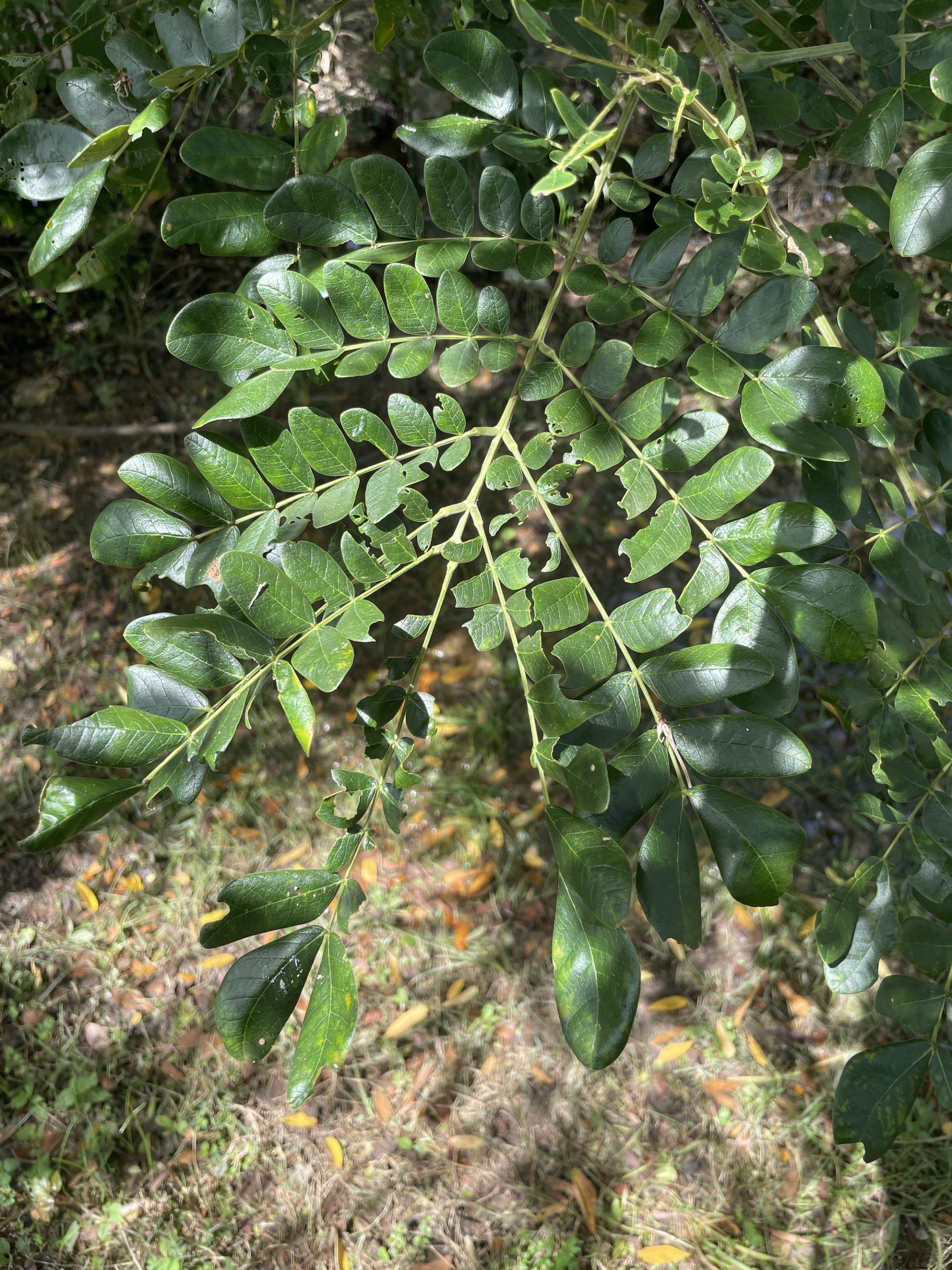
| Family | Fabaceae |
| Scientific name | Samanea saman |
| Common name (English) | Rain Tree |
| Common name (Malay) | Pokok Hujan-hujan |
| Identified as | Introduced plant on Project M.A.R.S.’s land |
Samanea saman, commonly known as the rain tree, is a large tropical tree in the Fabaceae family. Native to Central and South America, it is widely cultivated across tropical regions for its expansive, umbrella-like canopy, which provides shade and enhances soil fertility through nitrogen fixation. The tree produces flat, pod-like fruits and pinkish flowers that attract pollinators. Traditionally, various parts of the tree—including leaves, bark, and seeds—have been used in folk medicine for their anti-inflammatory and antimicrobial properties. With its ecological, ornamental, and medicinal value, Samanea saman is an important and iconic species in tropical landscapes.